

NAPL FLUTe: free-phase DNAPL detection
The reactive membrane that makes free-phase solvent (DNAPL) visible to the eye as soon as the liner is retrieved from the borehole.
Free-phase solvent (DNAPL)
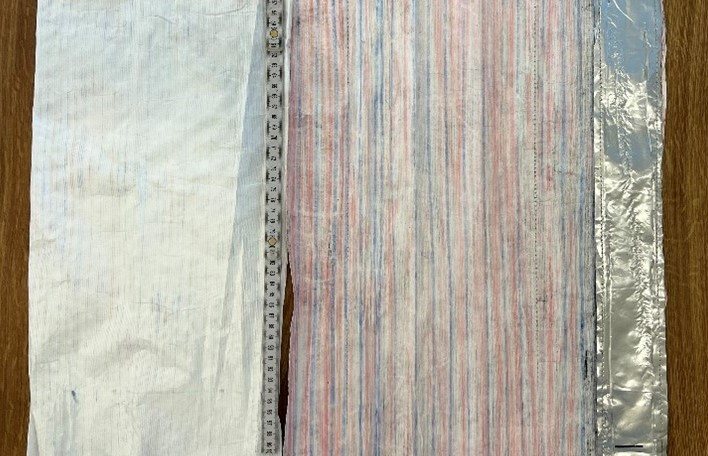
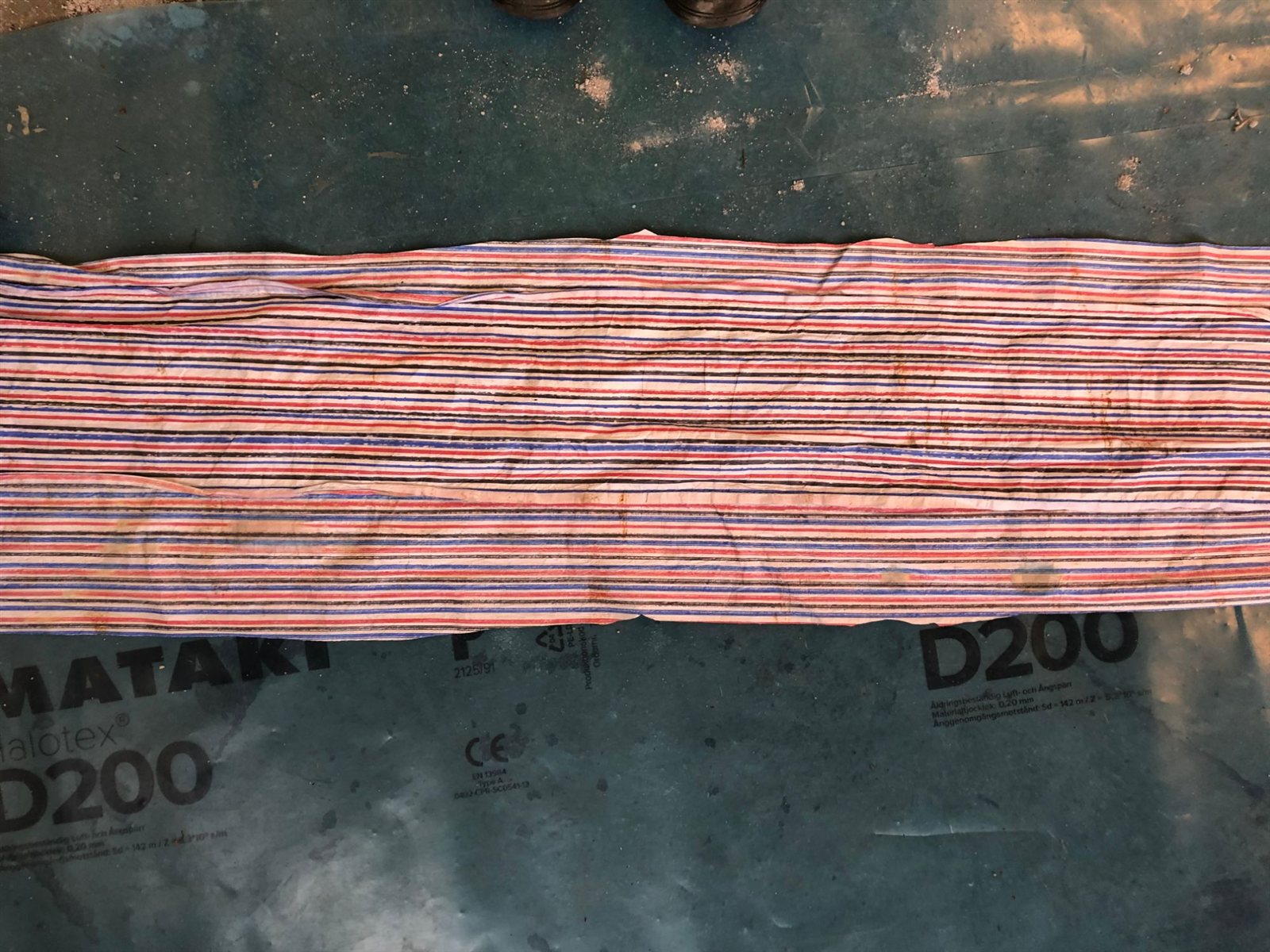
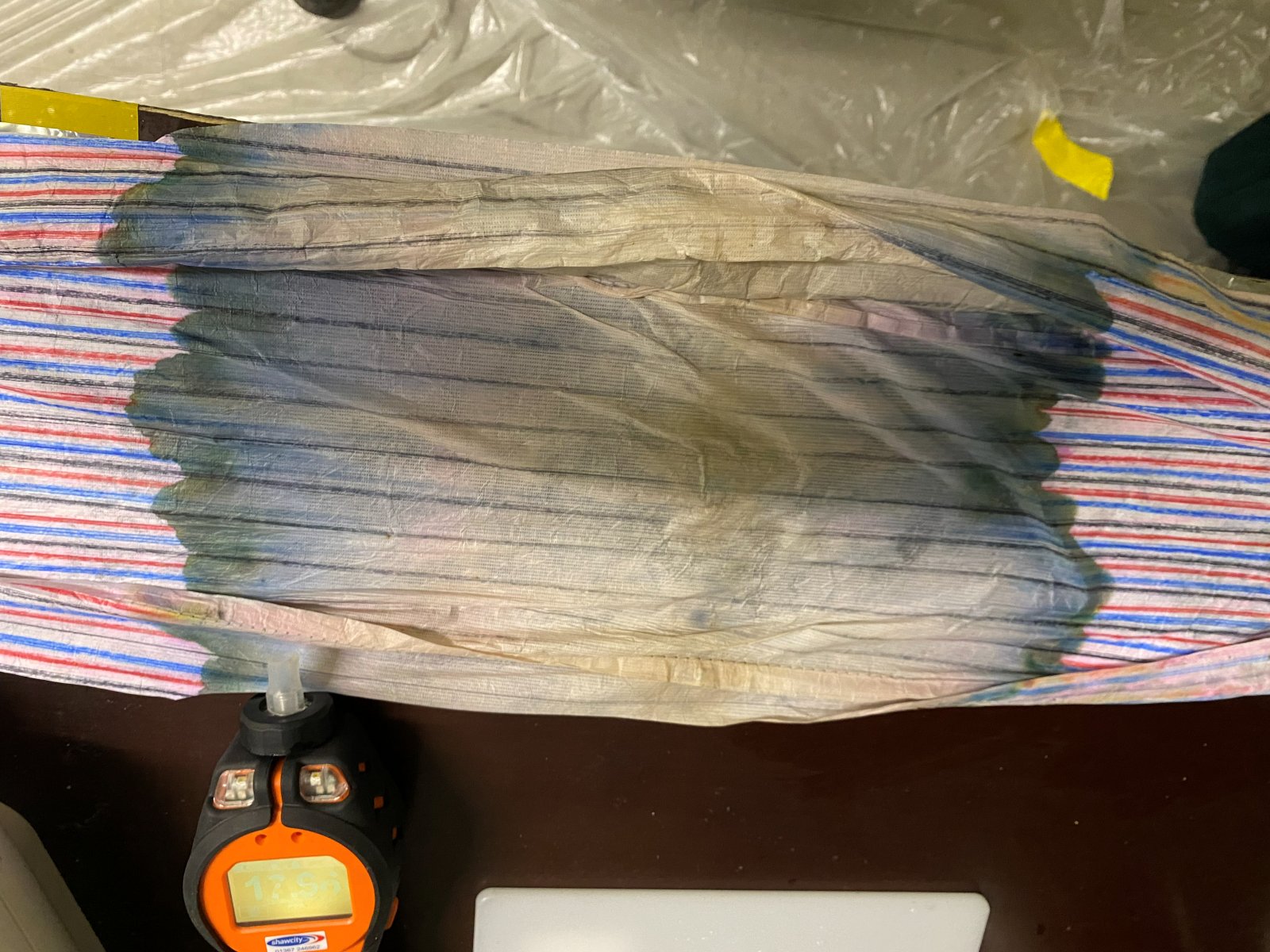
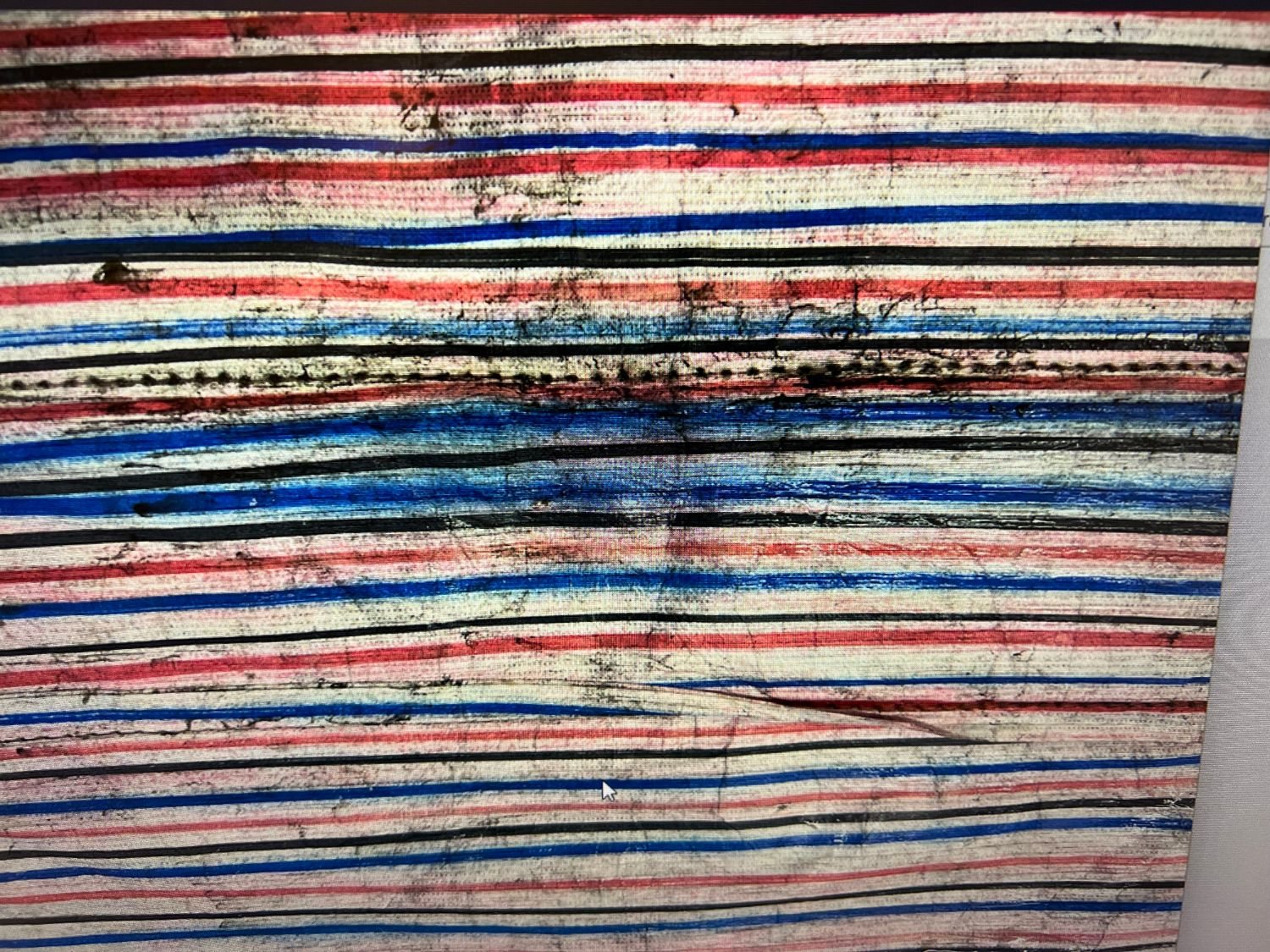
A NAPL FLUTe Liner consists of Tedlar material prepared with reactive reagent lines (the red, blue and black stripes). The NAPL FLUTe liner is attached to the outside of the Carrier Liner already at manufacture.
Because the Carrier Liner is held in place by keeping the water level inside the liner higher than the standing groundwater level in the open rock borehole, the NAPL FLUTe liner is pressed against the borehole wall so that it seals tightly against the rock surface, which prevents water and contamination from being transported vertically in the borehole.
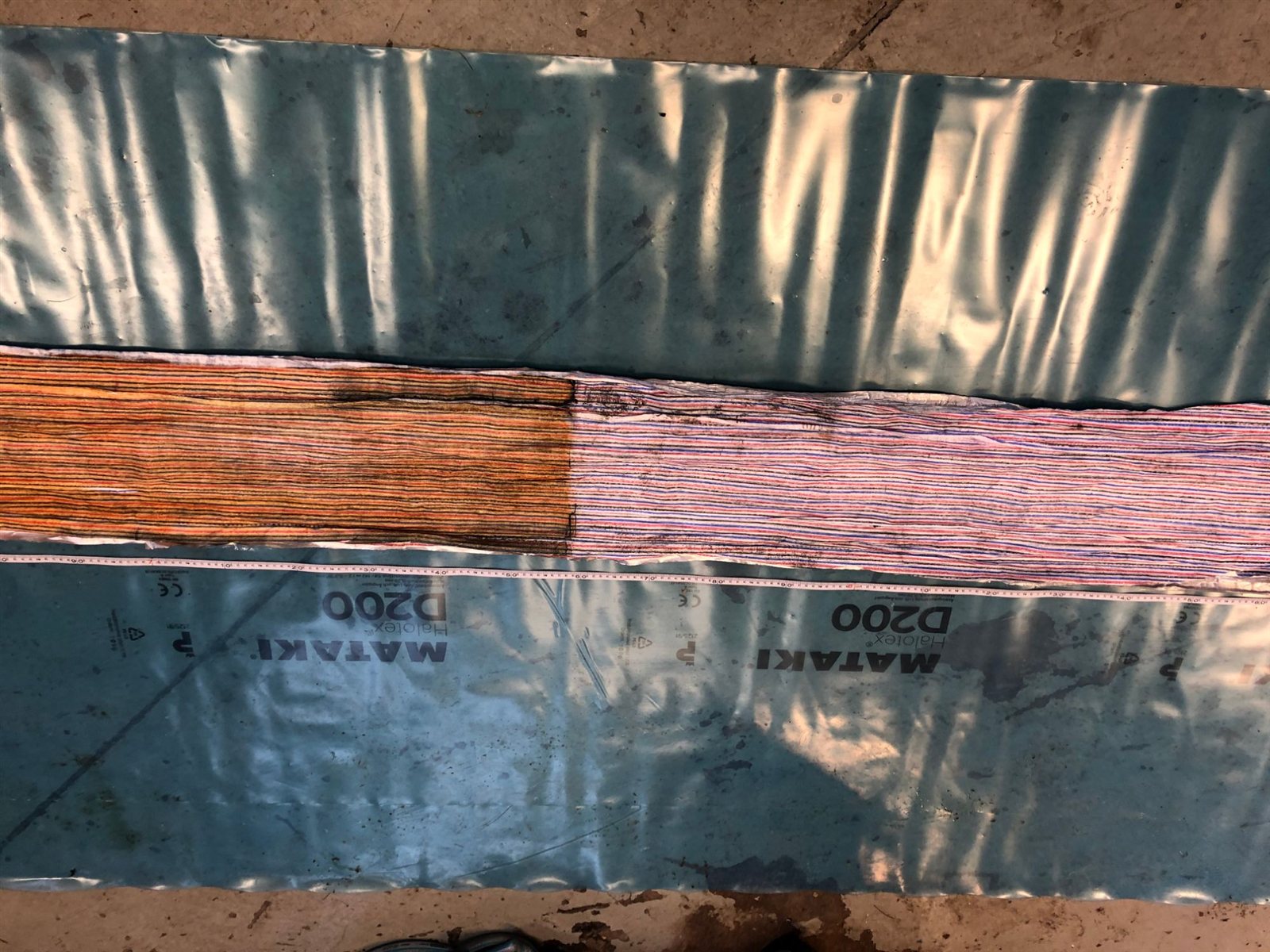
If free-phase PCE or TCE comes into contact with the reagent lines, this results in a distinct colour change of the reagent lines. The exact depth of each contamination encountered can therefore be read directly on the membrane when it has been retrieved from the borehole.
When the NAPL FLUTe liner has been separated from the Carrier Liner, it is laid out in full on the floor and cut at the bottom of the casing and at the measured bottom of the borehole. The liner is then inspected for signs of free phase and photographed for the report.
The transition from casing to rock borehole is usually very distinct to the eye, mainly because the casing has usually rusted and discoloured the liner inside it. Once the liner has left the casing it is often clean and fine (as long as the upper parts do not contain free-phase solvent, petroleum oil, PAH or other discolouring contaminants). The discolouration of the liner gives an indication of the water quality in the upper parts of the bedrock: oxidised water results in a red discolouration, while reducing conditions give a black discolouration of the liner. This discolouration allows centimetre accuracy for the transition from casing to rock borehole.
NAPL FLUTe is often combined with a FACT strip, which shows dissolved contamination in the groundwater, in the same liner.
How the NAPL FLUTe membrane reacts
Discolouration on the liner
What the membrane is used for
The NAPL FLUTe liner is used to easily identify zones with potential free phase so that these can be delineated in depth. The strong red discolouration/bleeding at high concentrations of contamination in the water also indicates that a free-phase source may be nearby. In combination with the FACT results, these can point out depths and fracture systems that should be investigated further using a Cased Hole Sampler (CHS).
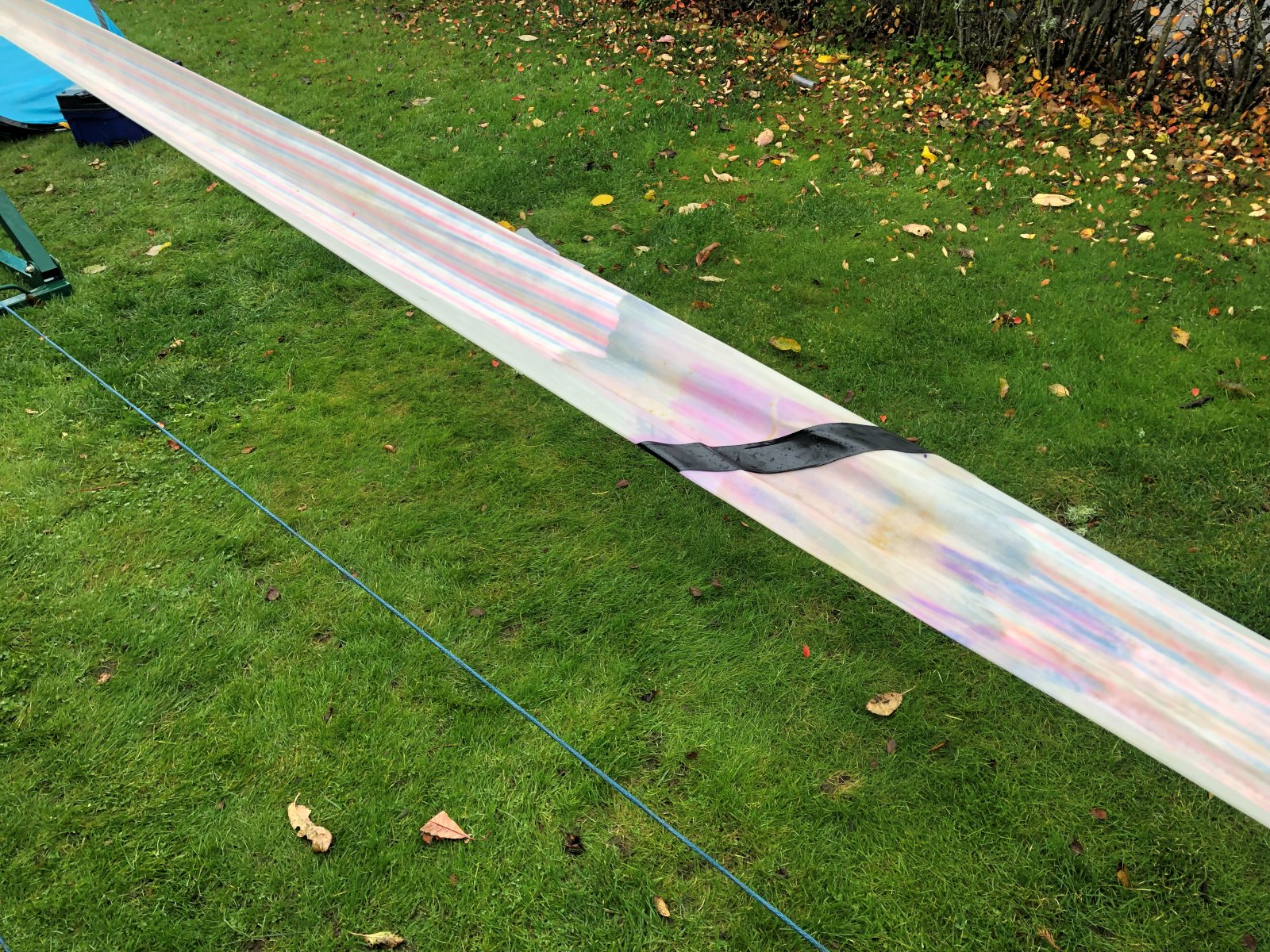
NAPL FLUTe in the field
Planning a bedrock investigation?
Contact us for a discussion about how FLUTe Liners can give you a more reliable result.
patrik@rosmarusenviro.com