

Cased Hole Sampler (CHS) and Waterflute
Level-specific water sampling in bedrock boreholes, with intake ports placed opposite the water-bearing fractures.
With Solinst FLUTe's Cased Hole Sampler, discrete water samples can be collected, which is a game changer for PFAS investigations in fractured bedrock.
Level-specific water sampling
CHS (Cased Hole Samplers) are used for level-specific water sampling. A CHS is a FLUTe liner with intake ports (screens) placed opposite the water-bearing fractures to be sampled. Each intake port is connected to its own sampling tube that leads up to the surface.
The liner seals tightly against the borehole wall between the intake ports. Therefore each sample comes from a single fracture or level, and water from different fractures is not mixed in the borehole.
Cased Hole Samplers come in two different versions. The first is installed mainly in boreholes where the groundwater level is no deeper than 7 m below ground level and can then be sampled with a simple peristaltic pump. If local rules do not allow the use of a peristaltic pump, or if the groundwater level is deeper than 7 m, a positive displacement Cased Hole Sampler (pdCHS) can be installed.
With a pdCHS the tube does not only go to the intake port but down to the bottom of the liner and back up to the surface. When gas pressure is applied to one leg of the U-shaped tube, a check valve at the spacer closes, and the gas pressure drives the water in the tube up to the surface. The spacer is located at a screened interval in the casing. When the gas pressure is released, the U-shaped tube fills again. A new pressure drives out the water in what is called a purge stroke. Several such cycles flush the water out of the filter pack, the formation and the tubing. A lower pressure is then applied to take the sample, in the same way as for the Water FLUTe system. In this way all ports in the liner can, with the help of a manifold, be purged and sampled at the same time.
A Waterflute is in principle the same as a pdCHS and can be installed to great depths and with a large number of intake ports.
From fracture to sample bottle
The intake ports are placed based on an earlier transmissivity profile, so that each port ends up opposite a water-bearing fracture. The animation first shows how the water is drawn in and rises through the tubes to a sample bottle each with a peristaltic pump, and then the gas-driven version (pdCHS), where a gas pump purges and samples via a U-shaped tube.
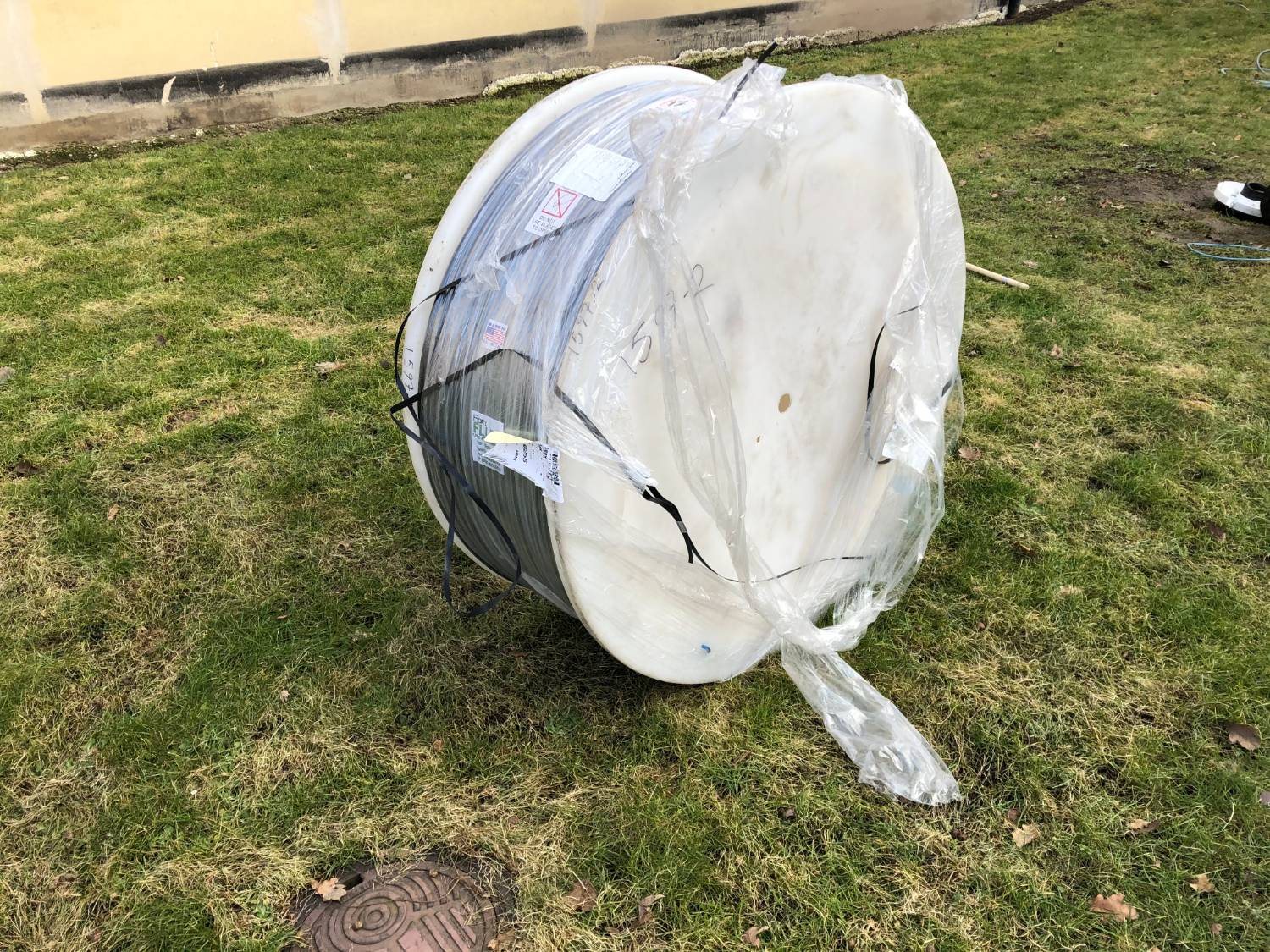
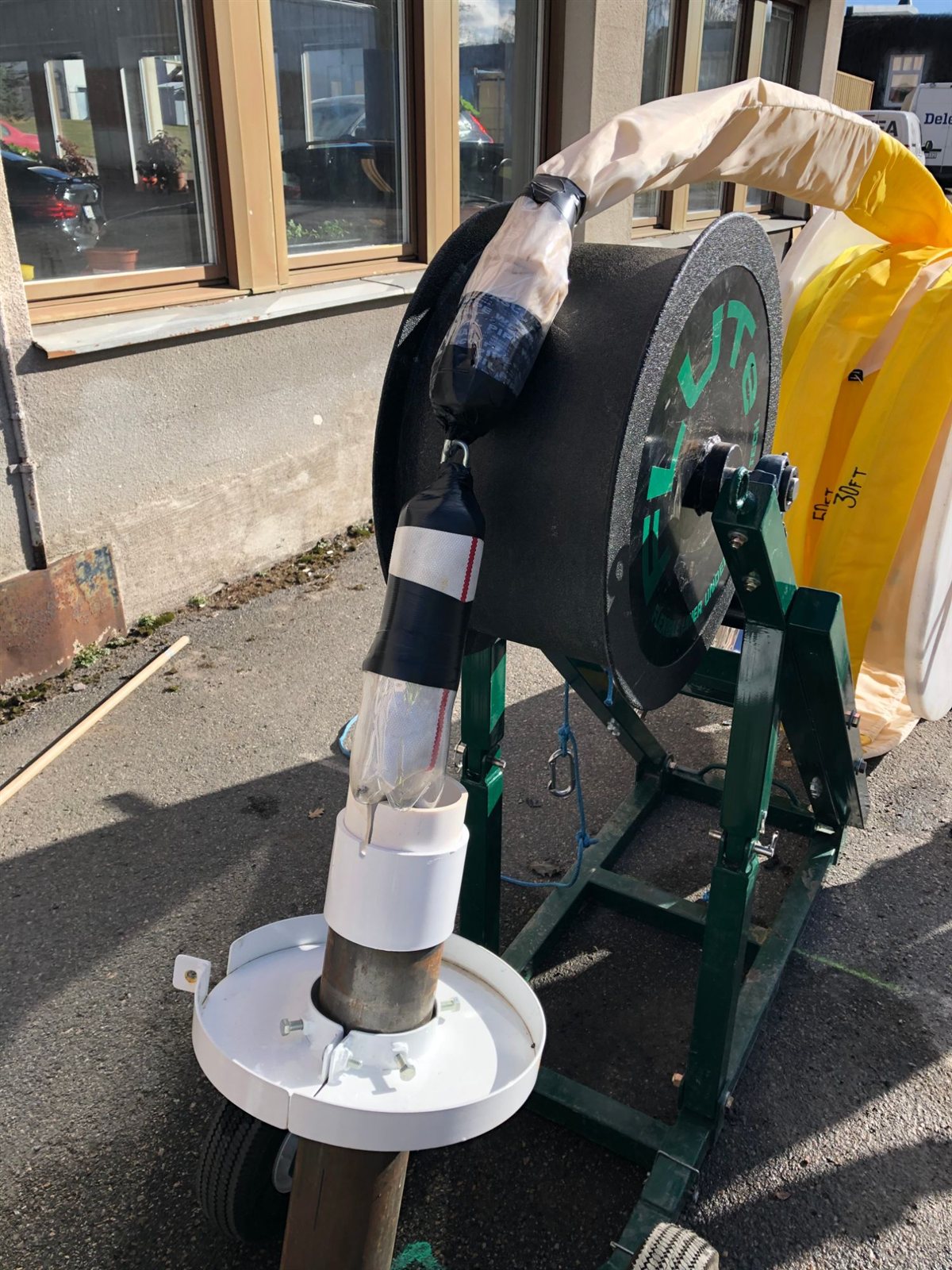
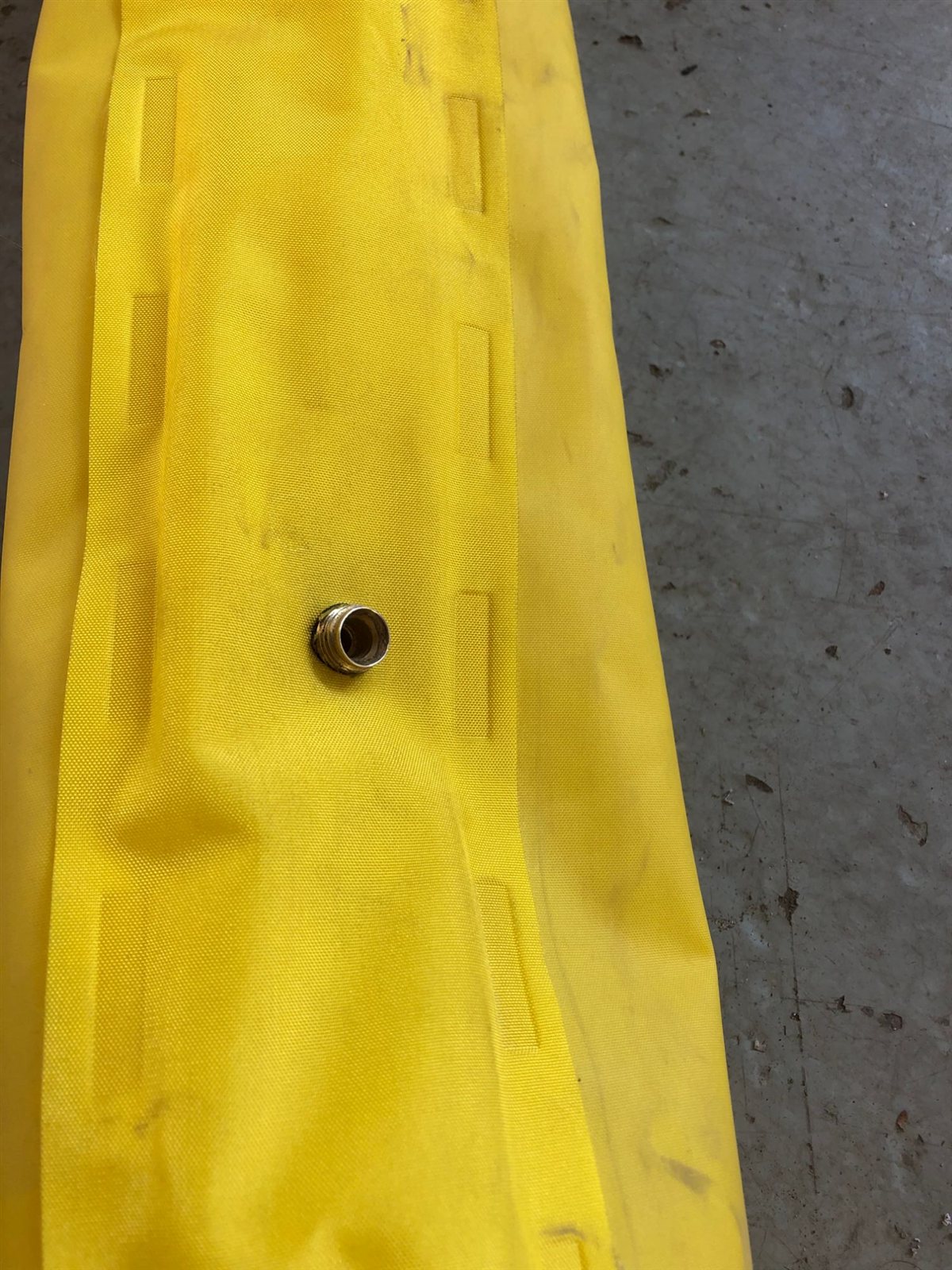
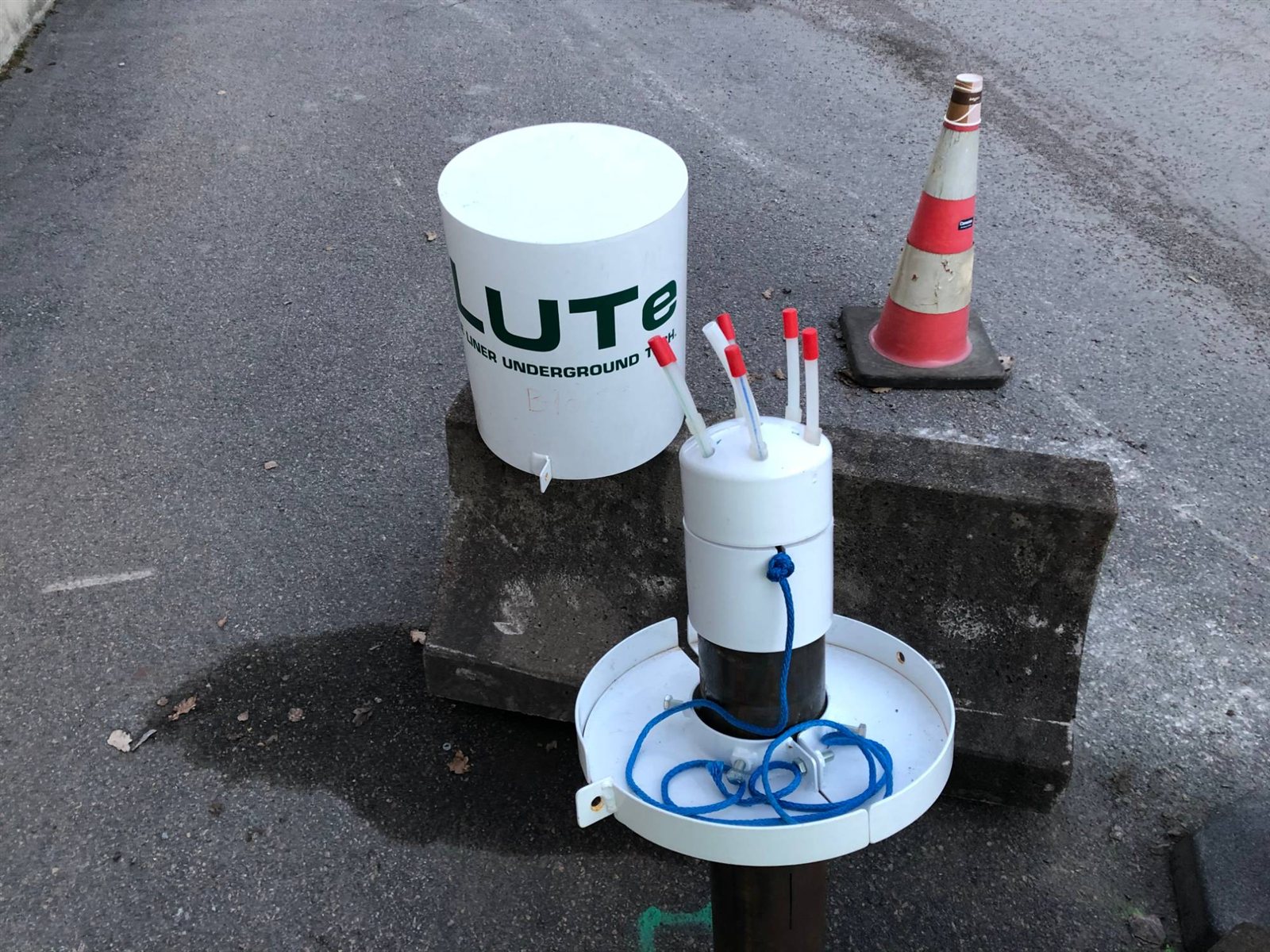
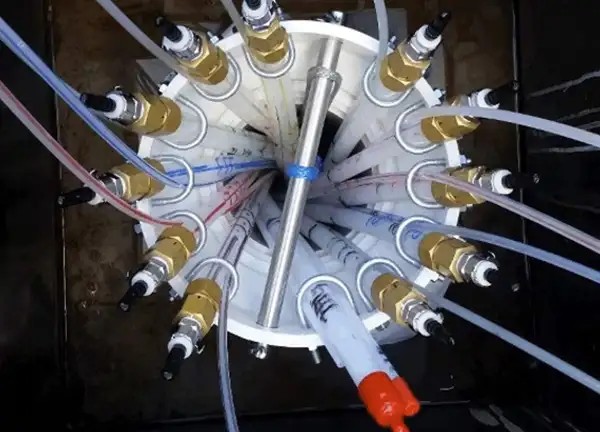
Cased Hole Sampler in the field
Planning a bedrock investigation?
Contact us for a discussion about how FLUTe Liners can give you a more reliable result.
patrik@rosmarusenviro.com