Additional services: environmental and geological investigations
Environmental and remediation-preparatory investigations as well as geological investigations.
Environmental and remediation-preparatory investigations
Ground investigations
We have very long experience of ground investigations with installation of observation pipes. As early as 2008, personnel in the company carried out MIP (Membrane Interface Probe) and Geoprobe investigations to delineate chlorinated aliphatics in source areas.
We have experience of most types of drilling, such as:
- auger drilling (solid stem and hollow stem)
- ODEX/Simplex
- hammer drilling in rock
- core drilling in rock with logging
- Sonic drilling
- GeoProbe drilling
- CPT tests and permeability ahead of injection in connection with remediation projects
But of course we also carry out smaller ground investigations with a hand-driven auger when needed.
Groundwater
Groundwater is part of almost all environmental investigations and we know how it should be carried out to collect high-quality samples directly in the field by ensuring that what we sample is a controlled sample with stable parameters. Our equipment includes different types of peristaltic pumps, Monsoon pumps (32 to 62 m lift) and gas-driven low-flow pumps. We verify the groundwater directly in the field with our new, calibrated YSI instruments.
Soil gas analyses and indoor air
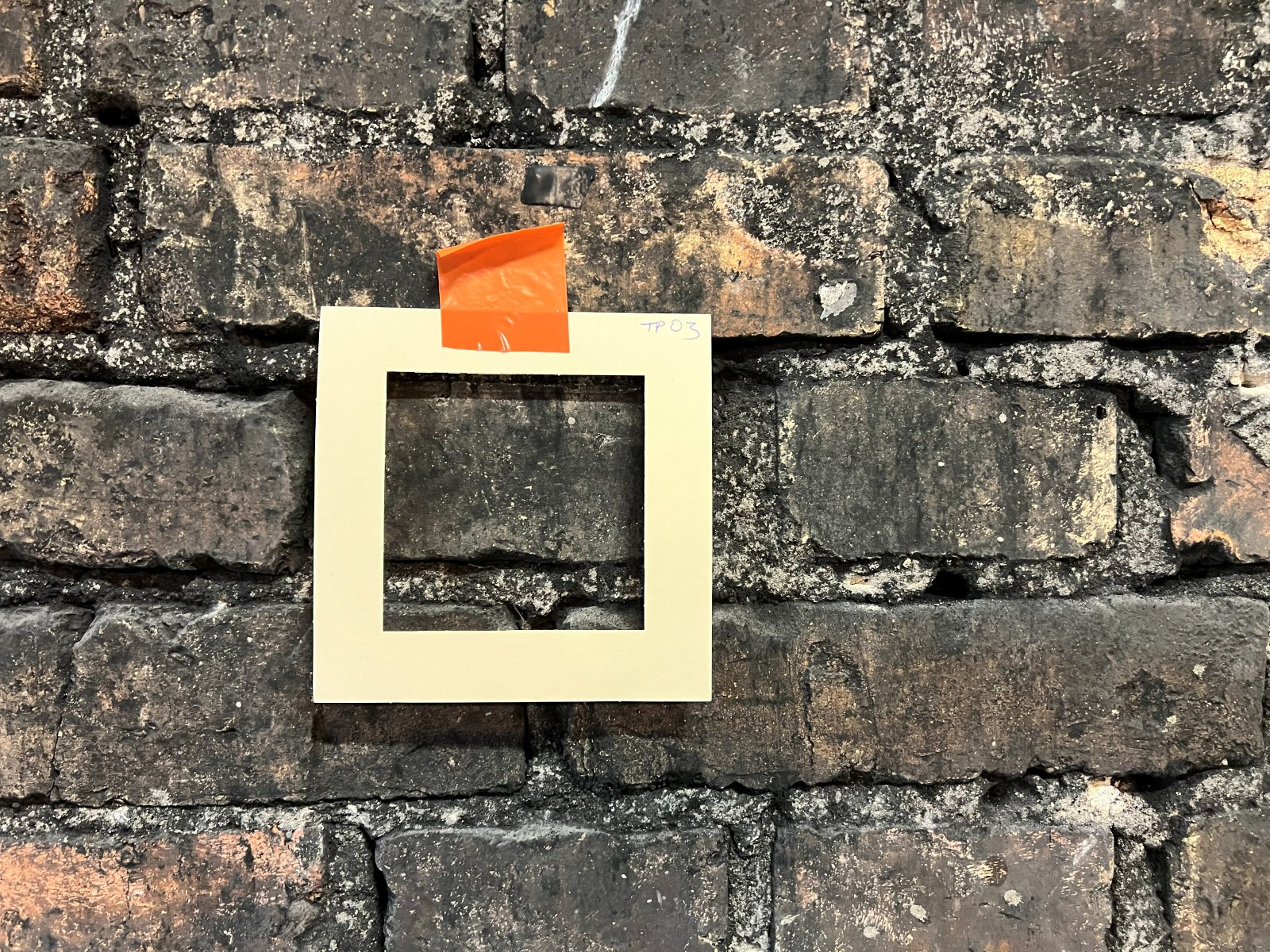
Is there a risk of intruding vapours in buildings or under the concrete slab of a building? We carry out soil gas analyses with either active collection in bags, in reagent tubes, by direct measurement with our sensitive Tiger photoionisation detector, or by passive sampling. We have solid knowledge of indoor sampling of soot and dust (metal particles) in industrial premises.
Surface water and sediment investigations
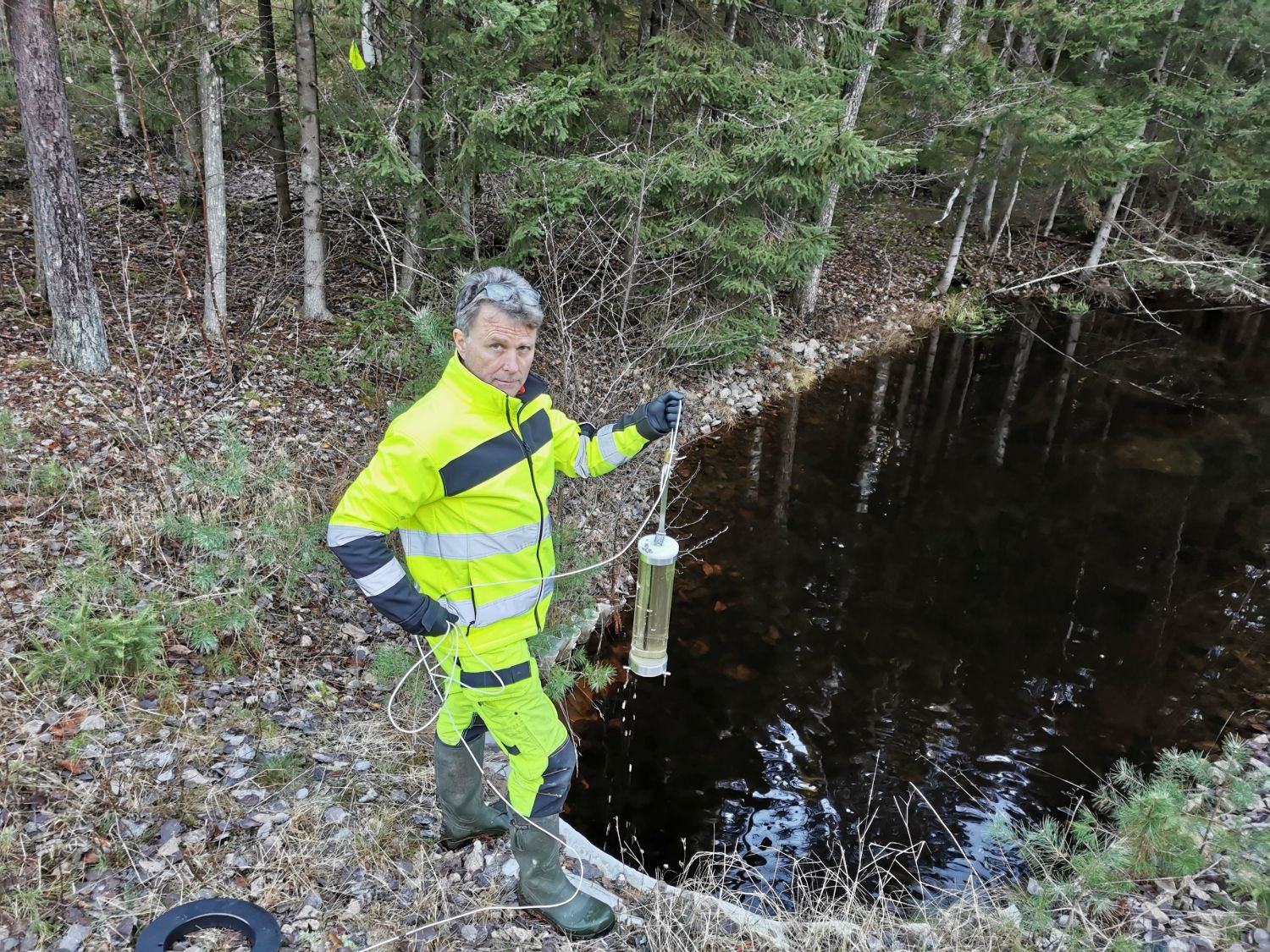
We carry out surface water sampling with a simple sampler or with our Ruttner sampler. Sediment sampling can be done with a grab sampler or a piston sampler.
Telemetric monitoring of surface water and groundwater
We can also install fully automatic measuring instruments for telemetric monitoring of flow, temperature, conductivity, oxygen level and more through our collaboration with Obscape (www.obscape.com). The instruments make it possible to observe changes in water quality in real time on a website dedicated to the project. The information can be completely open or accessed after logging in. Of course the data can be downloaded in any format. The equipment can be powered by batteries or, where possible, by solar cells. Sampling intervals can range from daily down to seconds, depending on the storage capacity of the instrument.
Geological investigations
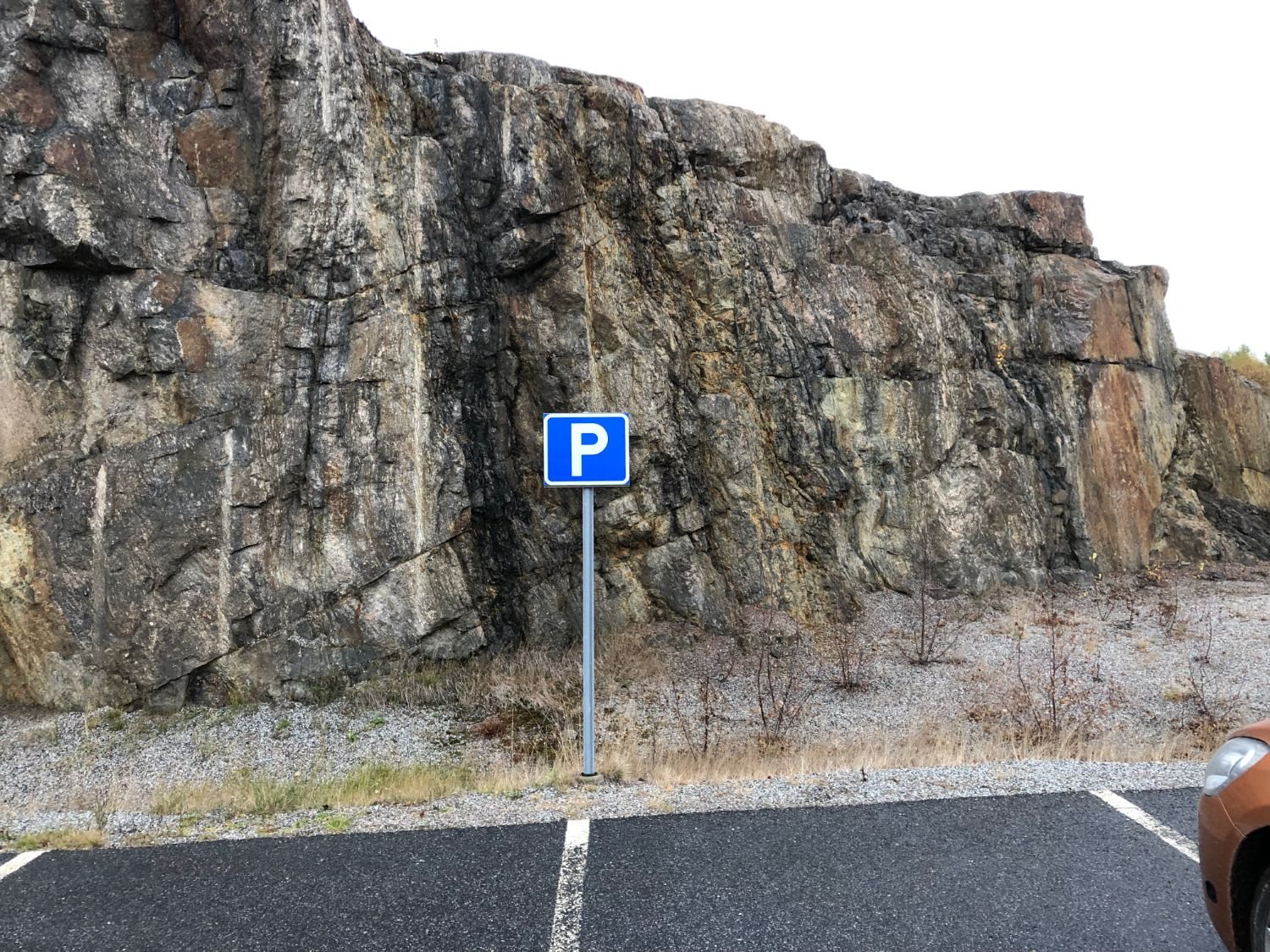
Geological bedrock mapping
Patrik has carried out bedrock investigations since the late 1990s on a consultancy basis. Work carried out on commission includes:
- geological mapping / mineralisations
- structural geological mapping and fracture mapping
- sulphide mapping and degree of acidification
- core logging of diamond drill cores
Patrik has led projects with core drilling in Sweden, Norway and Finland. These have focused on contamination in the bedrock, such as oil leaks from underground petroleum storage and chlorinated solvents after handling of TCE and PCE.
Sulphide mineralisation and risk analysis
We carry out bedrock mapping ahead of construction where blasting is included if there is a risk of sulphide mineralisations. Sulphides can pose a risk to surface water when they are released and exposed to oxygen. The sulphides break down and heavy metals can be released at the same time as the pH of groundwater/surface water falls and becomes acidified.
Sulphides in the bedrock can result in large extra costs for contractors if they have to be removed and cannot be used in the construction process as load-bearing material. Checking at an early stage for the presence of sulphides in exposures and cuttings can help avoid later cost increases in connection with a contract if you suddenly find yourself with large volumes of rock with no use or receiving site.
Fracture mapping and analysis
Fracture mapping can be carried out for a number of different purposes. We have carried these out to understand the spreading pathways in the bedrock of various contaminants such as chlorinated solvents or petroleum products. Does a contamination in the bedrock, for example, pose a risk to surrounding geothermal energy systems, or is there a risk that these can reach drinking water wells in the surroundings?
Fracture mapping can also be carried out to evaluate the risk of collapse in cuttings or tunnels. Rosmarus does not, however, carry out fracture mapping in tunnels for construction projects.
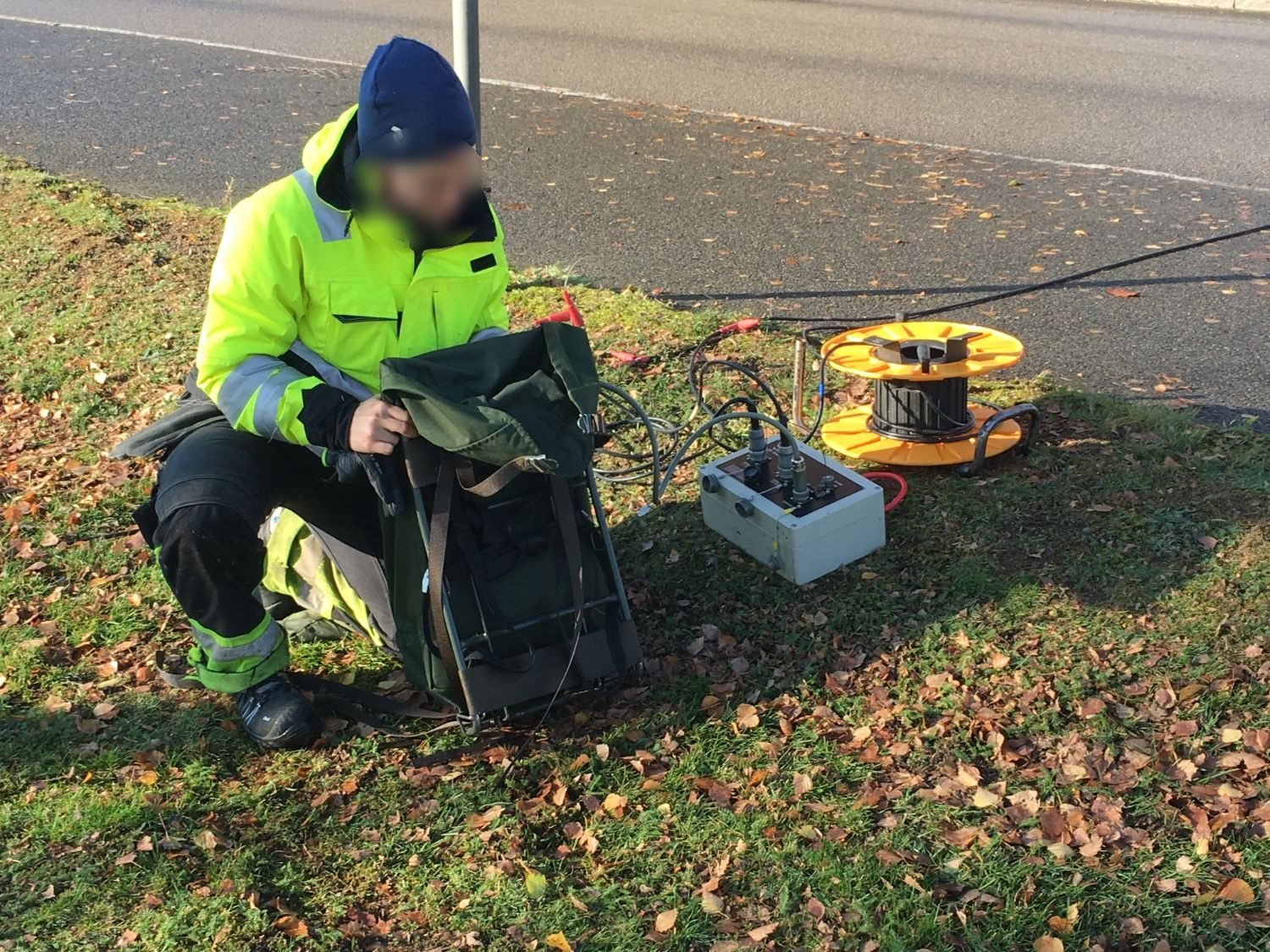
Geophysical investigations
Geophysical investigations to:
- locate the bedrock surface (electrical resistivity, seismics)
- locate fracture zones in the bedrock at depth
- borehole geophysics to identify fracture systems in the bedrock at depth in a specific area
In a number of projects over the years, Rosmarus has collaborated with various suppliers of geophysical investigations, partly to understand the shape of the underlying bedrock and thereby identify areas where contamination can accumulate, for example chlorinated solvents, and partly to identify fracture zones in the bedrock where the same contaminants can spread quickly with deeper groundwater.
After an initial aerial photo interpretation and fracture mapping of outcrops above ground level, an overall picture of the geometry of the fracture systems in the area is obtained. This information is used to optimise the layout of the geophysical profiles, for example electrical conductivity, so that they cross the most important systems and do not run parallel to them and thereby get missed in the model.
Geophysical bedrock investigations have on several occasions been able to show that a contamination in the bedrock could not pose a risk to nearby drinking water or process water wells, based on the configuration of larger fracture zones acting as hydraulic barriers in the rock.
Planning an investigation?
Contact us for a discussion about how we can help you.
patrik@rosmarusenviro.com